chr 500-0bCHR Dark Textchr 500-0bchr 500-0b
  • About
    • Centre for Humanities Research
    • DSI-NRF Flagship
    • Partnerships
    • Funders
    • Reports
    • Staff
  • Iyatsiba Lab
    • LoKO
    • Sound Working Group
    • Documentary film
  • New Archival Visions
  • Research Platforms
    • Aesthetics and Politics
      • Factory of the Arts
        • About the Factory of the Arts
        • Convening the Factory of the Arts
        • Artists in Residence
      • Research Projects
    • Becoming Technical of the Human
      • Laboratory of Kinetic Objects
      • Research Projects
    • New Ecologies of the Subject
  • Research Chairs
    • NRF SARChI Chair in Visual History and Theory
      • Postgraduate bursaries and postdoctoral fellowships in Visual History & Theory
      • Postgraduate Module In Visual History, 2023 (HIS 735/835)
    • Charlotte Maxeke-Mary Robinson Research Chair
    • UK-SA Bilateral Digital humanities chair in culture and technics
  • Fellowship Programme
    • Fellows
    • Winter School
    • Visiting Scholars
    • Seminar Programme
  • Publications & Archive
    • Publications & Creative Outputs
    • Galleries
    • Video
    • Film
    • Podcast
  • News
    • Workshops
    • Conferences
    • Lectures
    • Special Meetings
    • Colloquia
    • Seminars
    • Arts Events
  • Contact
✕ When autocomplete results are available use up and down arrows to review and enter to go to the desired page. Touch device users, explore by touch or with swipe gestures.
No results See all results

Call for Papers – Revolutionary Papers: Counter-Institutions, Politics and Culture in Periodicals of the Global South workshop
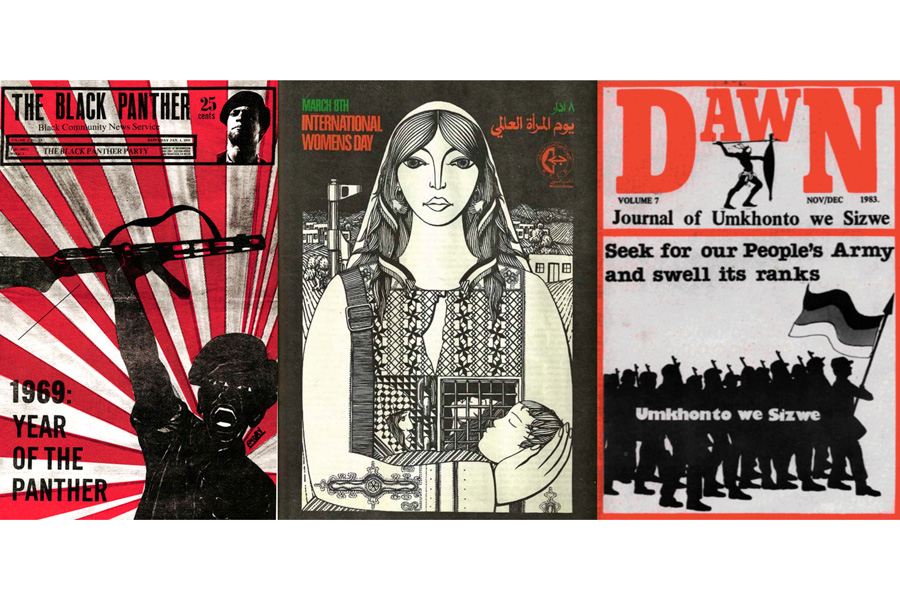
The CHR invites abstract submissions for a workshop titled Revolutionary Papers: Counter-Institutions, Politics and Culture in Periodicals of the Global South, taking place 23-24 April 2020 at the CHR. It is co-organised by Centre for Humanities Research and Department of History, University of the Western Cape; Faculty of English, University of Cambridge; Department of Sociology, London School of Economics, and co-sponsored by the Cambridge-Africa ALBORADA Research Fund and the Postcolonial Print Cultures International Research Network.

This workshop will examine 20th century periodicals and related print ephemera – including newspapers, cultural and literary journals, magazines, manifestoes, newsletters and political pamphlets – as sites of Left, anti-imperial and anti-colonial critical production throughout decolonization, anti-Apartheid struggles, and the post-colonial era. During this time the periodical acted as a conduit and a catalyst of collective critique and literature, discussion, and self-definition in multiple contexts and countries. This was made possible by the periodicals’ flexibility, its circulatory power, its capacity to foster intellectual and literary scenes, and its ability to form fields of political, cultural and social thought. These were developed through features such as records of debates, clubs and gatherings, essays, letters to the editor, translations, news, local and international literature, photography, and visual art. The workshop will explore these dynamics through an engagement with specific periodicals, focusing on three interrelated streams that explore periodicals as counter-institutional, counter-political, and counter-cultural.

Counter-Institutional: The Material Histories of Periodicals


Many periodicals were formed under conditions of colonial and imperial destruction, and functioned as forums for the development of oppositional politics, literary scenes and art practices. Through the development of counter-institutional structures, periodicals shaped the left intelligentsia and literati, and facilitated the formation of networks with regional and global movements. As low-cost, flexible publishing ventures, periodicals could nurture local culture through the publication of new writers, the transmission of key issues and debates, the fostering of intellectual events, networks and mentorship and the exposure of readers to local and regional work. Many also included international materials in translation, facilitating the speedy and inexpensive circulation of ideas, both regionally and globally. Presenters are asked to consider how periodicals constituted alternatives to intellectual, educational, literary or cultural establishments, as well as platforms that produced institutions and communities of culture and critique, as well as new scenes, readerships and counter-publics.

Counter-Political: The Political & Intellectual Histories of Periodicals


Left periodicals developed unique political vocabularies, analyses, and critiques that addressed local concerns and tied these concerns to global revolutionary politics. Journals were also engaged in international debates and exchange, translating, defining and re-inventing concepts like socialism, liberation, imperialism, patriarchy, capitalism, racism, secularism, or democracy across languages, for example Zulu, Xhosa, Swahili, Spanish, Arabic, or Urdu. Ideas and events such as the Algerian Revolution, the Vietnam War, Cuban Revolution, and the anti-Apartheid movement circulated as revolutionary tropes through periodicals and other print. They captured shared political conditions and possibilities across the Global South. Such critique, which contains important information about local and regional modes of collective self-assessment and definition, has been relegated to the margins of print culture. Presenters are asked to investigate and retrieve non-canonical conceptual vocabularies of political critique produced and disseminated through radical periodicals, with a particular emphasis on concepts and terminology shared among publications across the Global South.

Counter-Cultural: Literary & Cultural Resistance in Periodicals


This stream will be dedicated to the periodicals’ role in the formation of oppositional literatures and arts practices. As flexible, multi-genre platforms, many journals provided a space for literary critique and debate alongside the publication of poetry, prose and visual art. This allowed literary circles to define the aesthetic and social parameters of their production as they published and disseminated new work. In this stream, we will focus on the question of how specific periodicals helped shape anti-colonial, Marxist, national, feminist and other collective literatures. We invite presenters to uncover how periodicals addressed critical questions, such as: What role does literature play in the process of social change, national identity and collective self-definition? How does literature support social endeavors such as literacy, education, and political mobilization? What is anti-colonial literature after colonialism? What aesthetic contents and forms should writers adopt and how do regional and global trends influence local literary styles? Should writers work in hegemonic or colonial languages? Or should they write in dialects and indigenous languages?

Format of the Workshop


The two-day workshop will take place at the Centre for Humanities Research, University of the Western Cape, and will engage ongoing research platforms including Aesthetics After Colonialism, Rethinking Political Theory, Visual History and Theory, and Other Universals. Presenters will be asked to bring scans/copies of their select periodical to share with other participants; they will also be asked to pre-circulate papers 3-4 weeks in advance. The workshop will open with presenters introducing their periodical(s), including insights into why they are revisiting them. This will be followed by presentations, talks, and discussions. We will include public historians and political organisers from Cape Town who employ periodicals in popular education.

Organisers will cover lodging, food, and transport in Cape Town. National and international travel will be reimbursed as available. Priority will be given to scholars travelling from the Global South.

Guidelines for Abstract Submission


We invite participants to engage comparatively with the periodical as a forum of local and transregional thought that addresses one or more of the above streams.  We recognize that the radical periodical manifested in vastly different forms—from Communist party organs, to guerilla newsletters and bi-lingual internationalist literary magazines. Researchers are invited to select and present on one or more collection of prints from any genre they consider relevant. Researchers are asked to include the following information when submitting their abstract:

  1. A description of periodical(s) including: a. Title(s), b. Circulation period(s) and region(s), c. Publication language(s), d. Type(s) (e.g. was it a weekly magazine or ad hoc guerilla bulletin), e. Name of the editorial collective(s) or movement(s) responsible for publication (if available), f. Digital copy of periodical cover (if available).
  2. Title and abstract of a paper focusing one (or more) political, conceptual, literary, cultural, organizational or other intervention by the periodical(s) in question. What can these periodicals lend to our understanding at this moment? [Max. 400 words]
  3. A short bio [Max. 100 words]

Please submit your abstract to revolutionarypapers@gmail.com by 30 November 2019.

All participants will hear back in December

Co-organised by:

Dr. Mahvish Ahmad

Andrew W. Mellon Postdoctoral Fellow

Centre for Humanities Research

University of the Western Cape

mahvishahmad2711@gmail.com

Dr Chana Morgenstern

University Lecturer in Postcolonial and Middle Eastern Literature

Faculty of English

Senior Fellow, Newnham College
cm894@cam.ac.uk

Dr. Koni Benson

Lecturer, Department of History

University of the Western Cape

kbenson@uwc.ac.za

Share
3

Related posts

Barrydale 2025: Steek my Weg Poster

Barrydale 2025: Steek my Weg


Read more

Artwork: Sonya Clark, We Are, 2023.

Exhibition Announcement: Every Artist Must Take Sides – Resonances of Eslanda and Paul Robeson


Read more

Film Screening: MILISUTHANDO


Read more

Good Morning Cape Town with Lester Kiewet: Remembering the Trojan Horse Massacre


Read more

Search

✕ When autocomplete results are available use up and down arrows to review and enter to go to the desired page. Touch device users, explore by touch or with swipe gestures.

Sign Up to our newsletter


Stay up to date with the latest news and developments from the Centre for Humanities Research.


Recent Media

  • ENGAGE/REFLECT/CREATE: The CHR-Encounters Documentary Series
    August 19, 2025
  • Exhibition opening: And I, a newly evolved fish.
    July 25, 2025
  • Holding a Thought – The puppetry of Ukwanda
    July 18, 2025
Centre for Humanities Research

1 week ago

Centre for Humanities Research
Exhibition, 'Every Artist Must Take Sides – Resonances of Eslanda and Paul Robeson' at the Akademie Der Kunste, Berlin in cooperation with the Centre for Humanities Research, 14 November 2025 to 25 January 2026.‘Every Artist Must Take Sides – Resonances of Eslanda and Paul Robeson’, launched on 14 November 2025 at the Akademie der Künste (ADK). The Paul Robeson Archive was founded 60 years ago at the former Akademie der Künste (East) in Berlin. The extensive collection provides an insight into the life and work of Paul Robeson – African-American singer, actor, lawyer and activist – and that of the author, anthropologist, UN correspondent, artist manager and political intellectual Eslanda Goode Robeson. The couple linked the anti-racist struggle in the USA with anti-colonial movements in Africa, Asia and the Caribbean, international workers’ struggles in the spirit of socialist internationalism, and anti-fascist freedom struggles in Europe – such as the Spanish Civil War. The title of the exhibition refers to the latter: a quote from Paul Robeson’s speech at the Royal Albert Hall in 1937 in solidarity with the International Brigades, in which he called for a clear stance against fascism.The artistic works focus on the actualisation of these resistant and relational practices, the role of voice, sound and body, and the questioning of geopolitical constellations between anti-colonial liberation movements and the Cold War. The ideas of international solidarity and universal humanity negotiated therein form the thematic space of resonance in which contemporary artistic works enter into dialogue with the archival materials.With artworks by James Gregory AtkinsonLeila BencharniaSonya ClarkLia Dostlieva & Andrei DostlievaAngela FerreiraMasimba HwatiPatricia kaersenhoutAriel William OrahKirsten ReeseMatana RobertsDread ScottKatharina WardaPhotograph of Sonya Clarke's multimedia installation, We Are (2023) with James Gregory Atkinson's Sohn/Brudet/Vater/Liebhaber/Freund (2023) ... See MoreSee Less

Photo

View on Facebook
· Share

Share on Facebook Share on Twitter Share on Linked In Share by Email

Centre for Humanities Research

1 week ago

Centre for Humanities Research
The CHR and Encounters invite you to a film screening of Milisuthando, on Friday 28 November, as part of ENGAGE/REFLECT/CREATE: The CHR-Encounters monthly screening programme.Date: Friday 28 NovemberVenue: Iyatsiba Lab, 66 Greatmore St, WoodstockTime: 6:00pmSpeakers: Bongani Kona (UWC) and Hankyeol Lee (Editor and sound Design)The event is free but RSVP is essential: centreforhumanitiesresearch@uwc.ac.zaFor more information: ... See MoreSee Less

Film Screening: MILISUTHANDO - The Centre for Humanities Research

www.chrflagship.uwc.ac.za

The Centre for Humanities Research (UWC) and the Encounters South African International Documentary Film Festival cordially invite you to the final session of ENGAGE/REFLECT/CREATE: The CHR-Encounters...
View on Facebook
· Share

Share on Facebook Share on Twitter Share on Linked In Share by Email

Centre for Humanities Research

2 weeks ago

Centre for Humanities Research
Women and Gender Studies Department Anniversary Events: 24 and 25 November, at Iyatsiba LabThe Women and Gender Studies Department, in partnership with the Human Rights Festival, Invites you to two events which mark the Department's 30th Anniversary. Both will take place at Iyatsiba Lab on 24 and 25 November Respectively.Please see attached for more details. RSVP: cdaweti@uwc.ac.za ... See MoreSee Less

Photo

View on Facebook
· Share

Share on Facebook Share on Twitter Share on Linked In Share by Email

Centre for Humanities Research

3 weeks ago

Centre for Humanities Research
Please join us for a guided walkabout by the curators of Tales of History Retold, currently showing at Iyatsiba Gallery until 28 November. Kim Gurney and Carlyn Strydom, the co-curators, will take visitors on a one-hour walkthrough, providing some context to the exhibition and exhibited works. Some of the participating artists will also be present. The first 20 visitors will receive a bespoke zine created for this exhibition project by Scott Eric Williams, in a limited edition, which riffs of the works and the process behind their making.Date: Saturday 15 November 2025Time: 11h00Venue: Iyatsiba Lab, 66 Greatmore Street, Woodstock (entrance on Regent St). Secure parking available.For more info: www.chrflagship.uwc.ac.za/exhibition-opening-tales-of-history-retold/ ... See MoreSee Less

Photo

View on Facebook
· Share

Share on Facebook Share on Twitter Share on Linked In Share by Email

Centre for Humanities Research

4 weeks ago

Centre for Humanities Research
Last night, 'Tales of History Retold' launched at Iyatsiba Lab. Curated by Kim Gurney and Carlyn Strydom, this exhibition invited 8 artists to select artefacts from the document archive of the AVA, as source material for an artistic response. It will be running until 28 November. See the link on bio for more details: ... See MoreSee Less

Photo

View on Facebook
· Share

Share on Facebook Share on Twitter Share on Linked In Share by Email

Research Platforms

  • NRF SARChI Chair in Visual History and Theory
  • Andrew W. Mellon Chair of Aesthetic Theory and Material Performance
  • Factory of the Arts
  • Laboratory of Kinetic Objects
  • Seminar Programme
  • Publications

Recently Added

  • Barrydale 2025: Steek my Weg
    December 2, 2025
  • Exhibition Announcement: Every Artist Must Take Sides – Resonances of Eslanda and Paul Robeson
    November 25, 2025
  • Film Screening: MILISUTHANDO
    November 21, 2025
✕ When autocomplete results are available use up and down arrows to review and enter to go to the desired page. Touch device users, explore by touch or with swipe gestures.

SUBSCRIBE TO OUR NEWSLETTER


Stay up to date with the latest news and developments from the Centre for Humanities Research.


© 2025 UWC | The Centre for Humanities Research. All Rights Reserved. Designed By Spotkolours Design
No results See all results